


Your company can have a polished Instagram account and still feel distant. It can also advertise flexibility while expecting people to be available at any hour. To connect with Millennials and Gen Z, start with the gap between your promises and everyday working life. Communication can show your culture; it cannot replace it. The people who work with you also influence how customers see your business.
Speak clearly and leave space to respond
Transparency begins by explaining objectives, priorities and changes with normal words. Tell what is decided, why and what consequences it will have. If a proposal is still open, say so. If there is already a decision, do not present the meeting as a vote to appear to participate. Trust needs understandable information and honest expectations.
Listening involves doing something with what you hear
Open channels for questions and proposals, respond with context and explain which ideas are applied or discarded. A less rigid structure can facilitate dialogue, but still requires clear responsibilities. Horizontality does not mean that no one decides. It means that a person can contribute without having to guess whether doing so will cause problems.

Make your values verifiable
Saying that your company has a purpose is simple. Demonstrating this requires decisions: how you handle a claim, how you choose suppliers or what opportunities you offer the team. The positive impact loses credibility when it only appears in a campaign. Choose concrete commitments, explain their limits, and show progress that you can sustain with verifiable information.
The ILO explains the concept of decent work through working conditions, rights, protection and dialogue. It is a useful reference to think about your culture beyond flashy benefits. A game table does not compensate for confusing communication nor does it by itself turn a job into a good opportunity.
Offer flexibility that really works
Working towards objectives requires agreeing on results, deadlines, resources and availability. In positions that allow it, teleworking may be part of the agreement. In face-to-face activities, flexibility may lie in predictable shifts, organized exchanges, or room to resolve personal needs. Don't promise autonomy if you then penalize any different way of organizing work.
Autonomy also needs coordination
Defines when a match is required, who unlocks doubts and how an incident is reported. Review the actual load before interpreting a delay as a lack of commitment. Evaluating deliverables helps when the objectives are reasonable; accumulating tasks and calling it freedom only changes the name of the problem.

Make learning part of the job
A development plan begins by asking what each person wants to learn and what the business needs. Agree on a skill, time to practice it, and an opportunity to apply it. Provide concrete feedback: what worked, what needs to be improved, and what the next step will be. Recognizing progress is as important as pointing out errors.
Training takes time, not just access
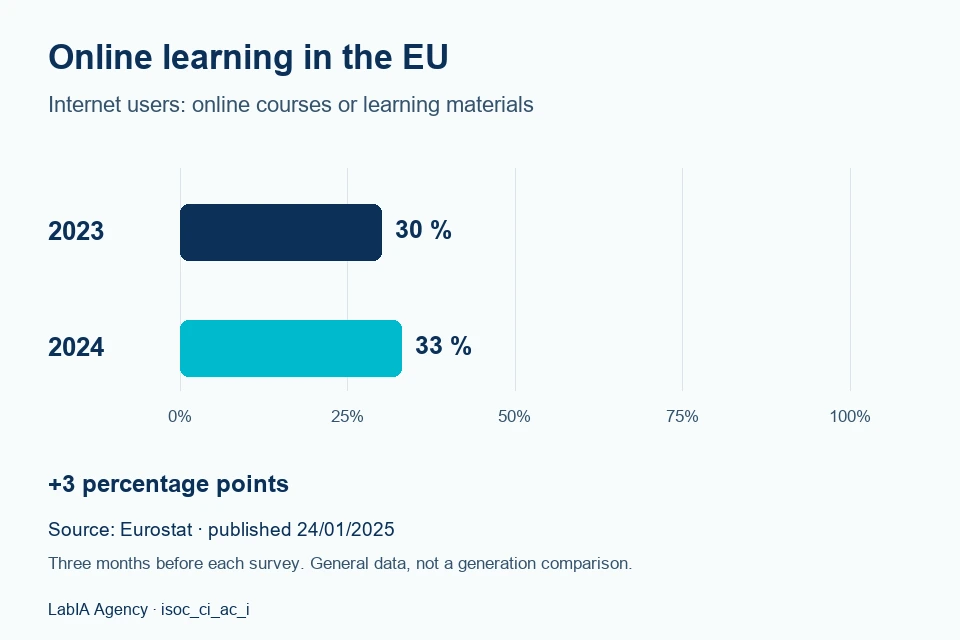
Eurostat puts online learning among EU internet users at 30% in 2023 and 33% in 2024. Its publication on online learning combines courses or materials used during the three months preceding the survey. These are general data, not exclusive preferences of these generations nor a measure of business training.
Use digital channels without playing a character
TikTok or Instagram can be used to show processes, present opportunities and answer questions. Teach real situations with permission of those who appear. A job offer needs understandable conditions; A commercial publication needs a clear proposal. Close codes work when they fit your company, not when they are added to look younger.
The W3C accessible writing guide offers clear content, informative titles and understandable links. Apply that criteria to your pieces: revised subtitles, readable text, and a visible next step. Closeness loses meaning if a part of the public cannot understand the message.

Start with an upgrade you can sustain
Over the next few weeks, choose a situation that creates friction and work with those who know it. You can start with these three decisions:
- Review a promise: compare what appears on your website with everyday experience. If there is a difference, correct the practice first and then update the message.
- Open a conversation: openly ask the team and your clients what information is missing. Explain what you will do with their answers and when you will share next steps.
- Reserve time to learn: turns a specific need into an accompanied and useful practice, with resources and a subsequent review. A course without an application ends up being another pending task.
Millennials and Gen Z bring together different people, not a collective personality. Ask, test and review. Our guide to connecting your brand with Generation Z will help you land communication. At LabIA we can turn your decisions into recognizable messages. Tell us what you want to improve: let's start with a concrete promise and an experience to back it up.