



To connect your brand with Generation Z, you do not need a collection of trendy expressions. You need a clear offer, evidence to support it and a conversation that feels natural. If your café claims to be welcoming but avoids a question about ingredients, a funny video will not fix the problem. Connection starts when people can check that your actions match your words.
Generation Z is not a single type of customer
Boundaries between generations vary depending on the source. Students, professionals, people with different budgets and diverse cultural experiences coexist within the same group. Define who you serve and what situation you want to solve. A quick breakfast, a space to study and a quiet meeting require different arguments, even if their protagonists are of a similar age.
Ask for needs, not stereotypes
Listen to what they ask before visiting the store, what they find difficult to find and what keeps them coming back. Sort those doubts into specific topics: prices, schedules, food options or accessibility. Do not deduce priorities from appearance or confuse the most striking comments with the opinion of the entire public.
Being on networks opens a door, but it does not guarantee interest
Eurostat indicates that, in 2025, 89.3% of people aged 16–29 in the EU used social networks, compared to 67.3% of all 16–74 year olds. The source explains that this use includes creating profiles or publishing contributions. These groups overlap: they do not represent separate generations nor do they measure purchases, trust, or brand preference.
What the graph really shows
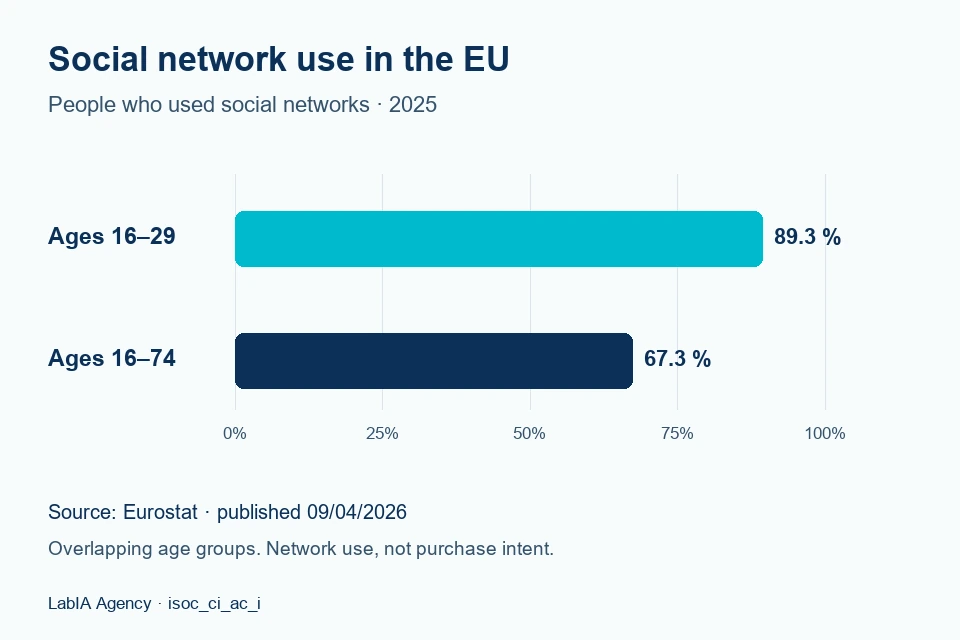
The Eurostat publication on young people and social networks, released in April 2026, allows you to contextualize the digital presence. It doesn't demonstrate which format works for your business. This response requires observing conversations and testing messages with a defined objective.
Teach something that a person can verify
If you explain that you make coffee carefully, show a part of the process and tell why it matters. If you advertise a special option, specify what it includes. AI-generated illustrative images can support an explanation, but should not be presented as photographs of real dishes, facilities or customers when they are not.
Change big statements for small signals
- Clarity: indicates conditions and prices when they are relevant to decide.
- Consistency: maintain the same information in publications, website and attention.
- Demonstration: use processes and examples that you can explain and verify.
- Respect: requests authorization for testimonies and identifiable images.
- Answer: offers a visible next step and responsible care.

Participate without feigning a borrowed personality
Direct language tends to help, but it does not force you to tweet, joke or use any tendency. Choose codes that fit your company and the context. If you don't know how to explain an expression, it probably isn't a good basis for your message. Naturalness also consists of recognizing limits and speaking as people responsible for the business.
Listening does not mean accepting any behavior
Answer useful questions, welcome corrections, and set limits on insults or private information. A specific criticism deserves a specific response; A delicate situation may require an appropriate care channel. Avoid turning every comment into a promotional opportunity. The conversation loses value when the brand seems to listen only to sell.
Try a small sequence and learn
It starts with three pieces: a frequently asked question, a demonstration and an invitation to learn about the service. Keep the same promise and change only the opening focus. Observe if related queries arrive, if people understand the offer and where doubts appear. Don't attribute a sale or lack of results to a single post.
Choose an acceptable trial period and record the questions that appear before and after publishing. If a piece gets attention, check which part sparked interest and whether that interest fits with your service. When a post doesn't work, review the clarity of the offer before changing the entire brand personality. Subsequent experience also matters: a difficult reservation or a late response can break a good first impression. Communication gains credibility when the entire journey is coherent, from discovery to the attention each person receives when contacting your small business.
Connect this work with our guide on generational tone to spread your brand. At LabIA we help you transform what you hear into useful content. Let's talk about your audience and your proposal: we can start with a real question, a clear answer and a reasonable next step.