
Yes, AI can help you create visual assets and, depending on the tool, generate or transform video. But a spectacular piece is not automatically ready for any network. images and videos need a clear idea, an appropriate format and a review that checks if they represent what your business really offers.
Generating, editing and publishing are different tasks
One tool can produce an illustration, another can enlarge a frame, and another can prepare clips. That does not mean that all of them allow you to generate video, add subtitles or publish directly. Before hiring, check what part of the process each function solves and what you will have to complete with editing or your own material.
Start with the message and the situation
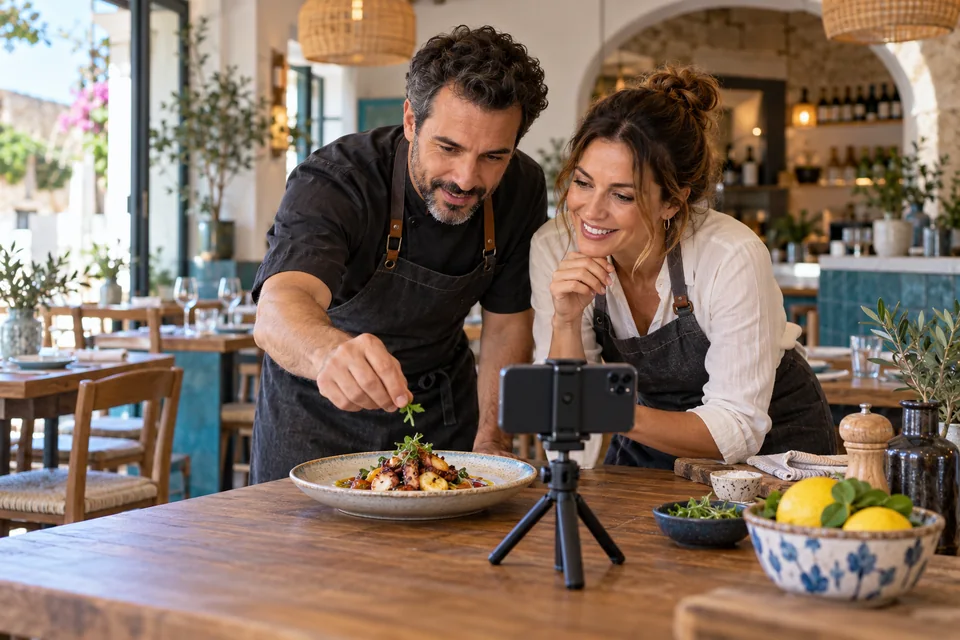
If a restaurant wants to present its menu, showing its real dishes provides information that an invented image cannot replace. AI can help with ideas, illustrative backgrounds or support resources, always differentiated. The content must provide a reasonable expectation about the experience the customer will encounter.
The same concept needs adaptations per channel
For Reels and TikToks, a vertical mount allows you to take advantage of the mobile space. In a carousel, the message is distributed between slides and needs continuity. Simply cropping a horizontal image can leave out the product, displace a face, or make an important sentence illegible.
The technical format alone does not decide the quality
For reference, see Google's official video generation documentation for available capabilities. Generation and publication conditions are different issues. Prepare a vertical version when the destination requires it, respect safe zones and review the export on a mobile before approving it.
- Vertical video: places important information away from buttons and interface areas.
- Carousel: uses an understandable sequence and an opening that explains its usefulness.
- Publication image: checks framing, readability and consistency with visual identity.
- Subtitles: checks transcription, contrast and sufficient time to read them.
- Cover: check how it crops in the grid and in previews.
What to check before finishing a piece
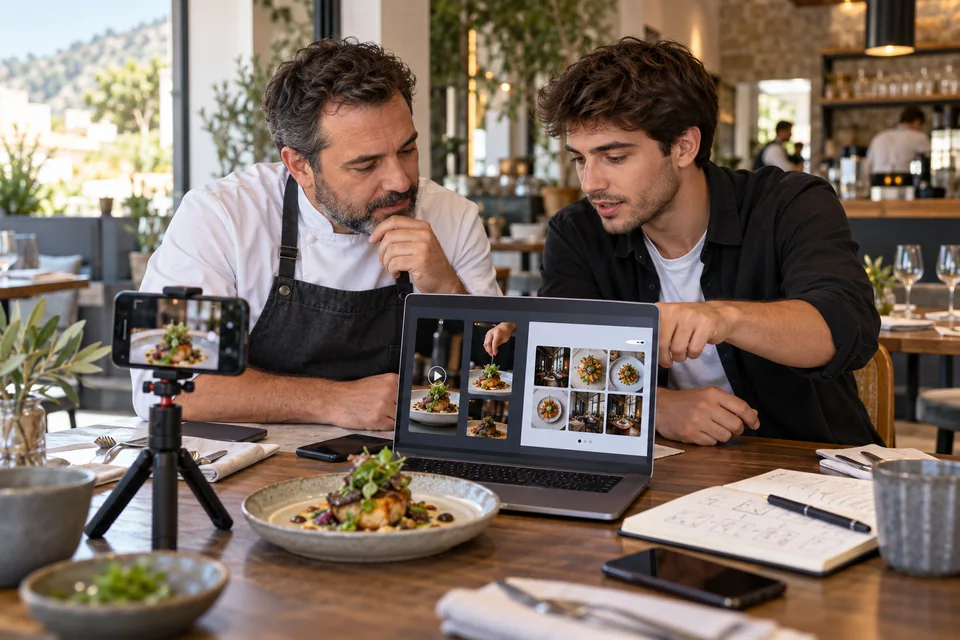
The patch needs more than just confirming that the file opens. Observe hands, objects, labels and product details. In video, check continuity, strange movements and changes between shots. If the generation alters an essential element of the service, correct it or use a real take.
A practical example for a restaurant
Record a finished dish, a brief preparation and the atmosphere of the premises. You can then organize those shots into a vertical piece and extract photos for a carousel. Use AI where it provides concrete help, preserving the real appearance of the food and the information on the offer.
Also review the conditions of use of music, photographs and generated resources. Technical possibilities do not replace permissions or channel rules. When the platform requires identifying content generated or altered with AI, it incorporates that information in the publication process.
Maintain a master file and prepare separate versions for each target. This way you can adjust the framing, cover and texts without successively degrading the material. Organize files with clear names and record which version is approved. Before programming, open each export on your mobile and carefully review the beginning and end. A call to reserve cut off by the interface or an incorrect subtitle can damage a piece that, seen in the editor, seemed finished.
Optimize to understand the message, not to fill the calendar
Test one piece before producing twenty
Check if it is understandable without sound, if the first scene presents an idea and if the next step is obvious. Check compression and file size in the final export. Then adapt the piece and see what questions or actions it provokes, without attributing results solely to the use of AI.
Discover how to organize content automation. At LabIA we can help you combine your own material and generated resources with a clear direction. Tell us what you need to show and let's define the appropriate format for each channel.